Showing posts with label Chinese calligraphy. Show all posts

Saturday, February 18, 2017

Farewell My Friend - 送友人

The finished calligraphy work:


Video about reading and writing this poem:


Transcript:

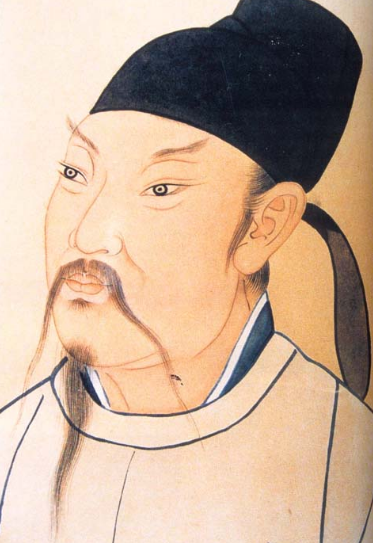
大家好, 在今天的視頻中,我將介紹一首為友人送別的唐詩。詩的作者是李白,他是唐朝著名的浪漫主義詩人,被人們尊為“詩仙”。

送友人 (李白)

青山橫北郭,
白水繞東城。
此地一為別,
孤蓬萬里征。
浮雲遊子意,
落日故人情。
揮手自茲去,
蕭蕭班馬鳴。

Explanation in modern Chinese:

譯文及註釋

作者:佚名
譯文
青山橫亙在城郭的北側,護城河環繞在城郭的東方。
我們即將在這裏離別,你就要像飛蓬一樣踏上萬裏征程。
空中的白雲飄浮不定,像你從此遊蕩各地,我無法與你重逢;即將落山的太陽不忍沉沒,亦似我對你的依戀之情。
我們揮手告別,從這裏各奔前程,友人騎的那匹載他遠離的馬,好像不忍離去,蕭蕭的嘶叫着,增加了我的離愁別緒。
註釋
①郭:古代在城外修築的一種外牆。
②白水:明淨的水,護城河 。
③一:助詞,加強語氣。爲別:分別。
④蓬:古書上說的一種植物,蓬草枯後根斷,又名“飛蓬”,常隨風飛旋,這裏比喻即將孤身遠行的朋友。
:遠征,遠行。
⑥浮雲:飄動的雲,這裏就像友人的行蹤,從此山南水北,任意東西。(把落日比作自己,抒發作者對友人的難捨難分)
⑦遊子:離家遠遊的人。
⑧茲 :現在
⑨蕭蕭:馬的嘶叫聲。
⑩班馬:離羣的馬。這裏指載人遠離的馬。

Link to Chinese - English translation tools that may help:

The Chinese-English popup dictionary:

Chinese Text Annotation:
http://mandarinspot.com/annotate

English translation by Ying Sun

A nice reading video:

Reference website:


Sunday, February 12, 2017

Farewell to Meng Haoran


The finished calligraphy work:


Link to Chinese - English translation tools that may help:


The Chinese-English popup dictionary:


Chinese Text Annotation:


黃鶴樓送孟浩然之廣陵
唐  李白


故人西辭黃鶴樓,
煙花三月下揚州。
孤帆遠影碧空盡,
唯見長江天際流。


黃鶴樓 : Yellow Crane Tower
送:   to see someone off
孟浩然:  Name of a friend
之:    to, towards
廣陵:   name of a place


故人:  old friend
西:  west
辭:  leave
煙: smoke, mist
花: flower
三月: March
下: go to another place which is located at the lower part of the river
揚州: Name of a city
孤: lonely
帆: sail
遠: remote, far away
影: shadow, shape
碧空: blue sky
盡:  the end (of sth.) , to the limit (of sth.)
唯: only
見: to see
長江: the Yangzi River
天際: the horizon
流: flow

A nice English translation by Ying Sun:

Explanation of this poem in modern Chinese:


Tuesday, November 15, 2016

Beyond the Border - A Tang Poem


出塞 (王之渙)

黃河遠上白雲間,
一片孤城萬仞山。
羌笛何須怨楊柳,
春風不度玉門關。


黃河 huáng hé   the Yellow River
遠  yuǎn far away
上 shàng up, above
白雲 bái yún  white clouds
間  jiān  in, between
一 yí    one
片  piàn  measure word for a tract of land
孤  gū  lonely
城 chéng   city
萬仞 wàn rèn   ten thousand rèn,  rèn is an ancient measure word for length
山  shān mountain
羌  qiāng  name of a minority ethnic group
笛 dí  flute
何 hé  why
須  xū  need
怨 yuàn  to complain, to blame
楊柳  yángliǔ  lit. willow tree (here it refers to a traditional tune)
春 chūn  spring
風 fēng  wind
不 bú  not
度 dù  to pass
玉門關  yù mén guān   an ancient fort or military post


A very nice English translation by  Ying Sun

Wednesday, December 2, 2015

A Character a Day 这


Video script:

Good morning, in this video we are going to talk about this character .  First I'll show you how to write it.
is a demonstrative pronoun, also know as 指示代词.  It indicates close persons or things. Sometime is followed directly by a singular noun, such as 这孩子。 This child. 
Sometime there is a classifier between and the noun, such as 这个孩子。  Also means this child.
Let's see a sentence example. 这孩子真顽皮。 这孩子 this child, really, truly, 顽皮naughty; This child is really naughty.

If we add a classifier between and 孩子。                                                                                       
这个孩子真顽皮。It also works. The same meaning as the previous sentence.

can also be followed by plural noun. For example, 这三个孩子    these, three, the classifier for people. These three children. 

Another example, 这三张图片。张 the classifier for thin and flat things such as paper. Here is for the picture.  图片  picture.    这三张图片。These three pictures.

When we want to refer to persons or objects without specific number or quantity, we need use这些 this, some few. So 这些 means these.
For example,
这些孩子() .    These children.   the plural mark for noun.
这些图片。   These pictures.

Also please notice that sometime is pronounced as zhèi . zhè or  zhèi both are correct.
So when we want to say this or these in Chinese, we need . How about that and those, we will need .  I will talk about in my next video. See you then.


Friday, November 20, 2015

A Character a Day 他


Video script:

Good morning. In this video, we are going to talk about character . It means he, him, or other. First let's see how to write it.
The main usage of is working as a pronoun, referring to the singular male third person.   he, him ;  他们  they, third person plural. It may refer to a group of people including only male persons or both male and female. But if there are only female persons in a group, we need use 她们。The left part of 她,  女字旁, refers to female.

also means other, another. 
他人  others, other people
他杀 other people, kill, killed by other people, homicide. If the death is caused by oneself, suicide will be 自杀. oneself, kill, 自杀 suicide.
他乡 , another, town, village, 他乡a place far away from one's home town . Then how to say 'hometown'?  Home town will be 家乡, home, family; 家乡 hometown.
Sometimes is used in a word just for its sound. Such as 吉他 means the music instrument- guitar. doesn't carry any specific meaning here.  That's all for today. See you soon. Thanks for watching.


Sunday, November 15, 2015

A Character a Day 们


Video script:

Good morning. In this video, we are going to talk about . It sounds men, and it is a plural marker for pronouns, and nouns referring to individuals. If you watch my pervious video, you will know more about the right part of this character . By itself, it means gate or door. But here, it is the component of this character , and it marks the sound as men. The left part is the radical, a single standing person, 单人旁, which indicates that this character has something to do with the human being.
Let's see how to write it.
Since it's a plural marker, we will see how it works to mark the plural word.
First it can change the single pronoun into plural. For example, , I or me; 我们 we or us. , indicate a single you; 你们 refers to a plural you; ,he; 他们, they; , she; 她们 refers to a group of female persons.
Second it can change the noun into plural. For example,  , person; 人们, people;  孩子, child; 孩子们, children; 女士, lady; 女士们, ladies; 先生, sir, gentleman; 先生们, gentlemen;
But please notice that is not to be used after a noun that has a numeral modifier.
Such as,  two children is not 两个孩子们 . This is not right. The correct translation is 两个孩子。

That's all for today. I will see you soon. Thanks for watching.

Saturday, November 14, 2015

A Character a Day 门


Video script:

Good morning my friend. In today's video, we are going to talk about this character . It has the meaning like 'gate, door, entrance, opening'. First I'll show you how to write it.
The traditional writing style looks more like a door .  In history many famous calligrapher wrote in cursive script, like this. Later it became the simplified writing style that we are using today.
Character is part of many words. You can always find those words have certain relation to an entrance.
For example, 门口   entrance, doorway.  door or gate, mouth, open end; 门口 is composed of two characters which have the similar meaning. let's see more examples:
学校门口  school entrance ;  学校 school
医院门口 hospital entrance; 医院 hospital
At some  theater or museum, ticket is required for admission.  Ticket 门票, which literally means entrance ticket.
is also an important radical. So you will find working as part of many other characters, such as, to ask. There is a , mouth in the entrance.  When you ask, you will need your mouth, and you will find the entrance to the information or knowledge you need.
to hear.  I feel this character depicts a person putting his ear between the gap of the door to eavesdrop on something, that is, to hear. 
 That's all for today. Thanks for watching. I will see you soon.


Wednesday, November 11, 2015

A Character a Day 在


Video script:
Good morning. In this video, we are going to talk about character .  It means to exist or be located at. First let's see how to write it.
The oldest writing of the character shows us the structure of a house beams and columns. Later its shape changed into this appearance more like the one we are using right now. The left part refers to the beams and columns, which represents the house. The right part is , which represents the land.  So this character means "owning house and land, one is settled down and located at certain place. " We can still see this meaning in its modern usage.
can work as a verb, which means 'to locate at, to exist' .
For example, -  哪儿?   you, to locate at, 哪儿 where.  Where are you? 
室。 I, to locate at, 办公室 office. I am at the office.
also works as a preposition. It can mean 'at, on, in'. Such as,  我在办公室看书。 I, at, 办公室office, read, look; book;  I read a book at the office.

That's all for today. I'll see you soon. Thanks for watching.

Friday, November 6, 2015

A Character a Day 我


Video script:

Good morning.  In this video, we are going to talk about this character .  It means 'I or me'. First I'll show you how to write this character.
The earliest writing style of depicts a type of ancient weapon. We can see the blades and the handle. In the modern writing of , we can still peek the at the right part.   is a type of weapon.
Here is a picture of a , the ancient weapon.
There are some professional explanation about how this character 我 evolved from a type of weapon to become 'I or me' . To help you remember this character, I am going to make up a story. 
If you look carefully, maybe you will notice that the left part of 我 is a hand.
 The right part is , the weapon. So我  portrays a picture: a person holding the , the weapon, in hand, and acclaims 'I am here. This is my territory' .
Hope this will help you recognize this character . It means I or me.  That's all for today. I will see you soon. Thanks for watching.


Saturday, October 31, 2015

A Character a Day 有


Video script:


Good morning my friend. In this video we are going to talk about this character .  It has the meaning like 'to have' or 'to exist'. I will show you how to write it first.
One of the old writing style looks like this. The top part refers to a right hand, and the bottom part refers to a big chunk of meat. For the ancient people, to have a big chunk of meat was a big deal. That showed they did HAVE a fortune. 
The most frequent usage of is that it works the same way as the English word 'to have'. Such as, I have many good books. 我有很多好书。 I, have, 很多 many, good, book.
Another frequent usage of is that it works like the 'there be' sentence in English.
For example, there are many good books in the library.
图书馆有很多好书。
图书馆 library, there be or exist, 很多 many, 好书 good book.
That's all for today. I will see you soon. Thanks for watching.