Showing posts with label Traditional Chinese. Show all posts

Saturday, February 18, 2017

Farewell My Friend - 送友人

The finished calligraphy work:


Video about reading and writing this poem:


Transcript:

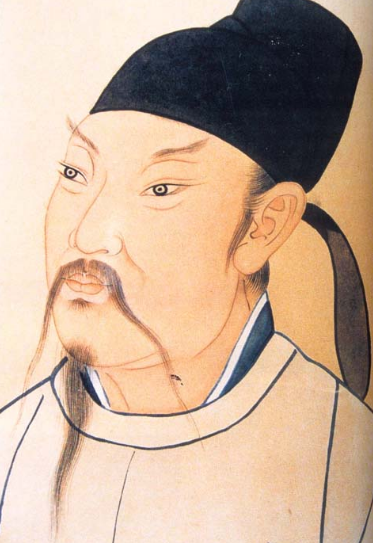
大家好, 在今天的視頻中,我將介紹一首為友人送別的唐詩。詩的作者是李白,他是唐朝著名的浪漫主義詩人,被人們尊為“詩仙”。

送友人 (李白)

青山橫北郭,
白水繞東城。
此地一為別,
孤蓬萬里征。
浮雲遊子意,
落日故人情。
揮手自茲去,
蕭蕭班馬鳴。

Explanation in modern Chinese:

譯文及註釋

作者:佚名
譯文
青山橫亙在城郭的北側,護城河環繞在城郭的東方。
我們即將在這裏離別,你就要像飛蓬一樣踏上萬裏征程。
空中的白雲飄浮不定,像你從此遊蕩各地,我無法與你重逢;即將落山的太陽不忍沉沒,亦似我對你的依戀之情。
我們揮手告別,從這裏各奔前程,友人騎的那匹載他遠離的馬,好像不忍離去,蕭蕭的嘶叫着,增加了我的離愁別緒。
註釋
①郭:古代在城外修築的一種外牆。
②白水:明淨的水,護城河 。
③一:助詞,加強語氣。爲別:分別。
④蓬:古書上說的一種植物,蓬草枯後根斷,又名“飛蓬”,常隨風飛旋,這裏比喻即將孤身遠行的朋友。
:遠征,遠行。
⑥浮雲:飄動的雲,這裏就像友人的行蹤,從此山南水北,任意東西。(把落日比作自己,抒發作者對友人的難捨難分)
⑦遊子:離家遠遊的人。
⑧茲 :現在
⑨蕭蕭:馬的嘶叫聲。
⑩班馬:離羣的馬。這裏指載人遠離的馬。

Link to Chinese - English translation tools that may help:

The Chinese-English popup dictionary:

Chinese Text Annotation:
http://mandarinspot.com/annotate

English translation by Ying Sun

A nice reading video:

Reference website:


Monday, November 7, 2016

A Character a Day 出

The basic meaning of 出 is 'proceed from inside to outside'. The following short video shows you how this character evolved through time.


Next, let's see the common usage of this character in our daily life.


出来
chūlái
come out

出去
chūqù
 go out

你出来一下,我想和你谈谈。
nǐ chūlái yíxià , wǒ xiǎng hé nǐ tāntan .
Come out for a while, I want to talk to you.


我出去一下,马上回来。
wǒ chūqù yíxià , mǎshàng huílai
I am getting out for a short while, and I will be back soon.

出差
chūchāi
go on a business trip

明天我要去纽约出差。
míngtiān wǒ yào qù niǔyuē chūchāi
I am going to New York for a business trip tomorrow.


出国
chūguó
go abroad

他已经出国了。
tā yǐjīng chūguó le
He already left the country.

出版
chūbǎn
 Publish

这家出版社出版了不少好书。
zhè jiā chūbǎnshè chūbǎn le bùshǎo hǎoshū
This press has published many good books.


Friday, November 6, 2015

A Character a Day 我


Video script:

Good morning.  In this video, we are going to talk about this character .  It means 'I or me'. First I'll show you how to write this character.
The earliest writing style of depicts a type of ancient weapon. We can see the blades and the handle. In the modern writing of , we can still peek the at the right part.   is a type of weapon.
Here is a picture of a , the ancient weapon.
There are some professional explanation about how this character 我 evolved from a type of weapon to become 'I or me' . To help you remember this character, I am going to make up a story. 
If you look carefully, maybe you will notice that the left part of 我 is a hand.
 The right part is , the weapon. So我  portrays a picture: a person holding the , the weapon, in hand, and acclaims 'I am here. This is my territory' .
Hope this will help you recognize this character . It means I or me.  That's all for today. I will see you soon. Thanks for watching.


Monday, October 26, 2015

A Character a Day 人


Video script:
Good morning my friend. In this video, we are going to talk about this character . It means human, person.  First, let's see how to write it.
The oldest writing of this character looks like this. I think it looks like a person is bending down his body, and working in the field.
The modern writing looks like a person is striding ahead towards this direction. What do you think?
also works as a building block to construct more characters. Let's see this character, .  There are two , standing side by side.  Or we can say one person is following another one. This character means follow.
Now I am adding another person into this group, and we get this character , which means crowd. The idea behind the designing of new character based on existing character is pretty straight here.
can be used by itself. But more often it is combined with other characters to form words. Such as, 男人; , male, 男人 male person, that is man;  Another example,女人, , female; 女人 female person, that is woman; 
大人 , big, 大人big person, that is adult.  But in certain context, such as in the historical play, you may hear the word大人, which is a title of respect toward superiors, such as, lordship.

We just talked about the big person, 大人, what about the small person Yes,  that will be 小人, little, small; 小人,  little person. 
Since 大人, big person, means adult, does 小人, small person, means child?  That may be correct. Its meaning really depends on the context.  If this word is used to refer to another person, its meaning is negative. It means a base person, a vile character. This meaning is still widely used nowadays. While in some historical play, a person may use this word to refer to himself humbly.
That's all for today. Thanks for watching. I will see you soon. :)


Monday, August 24, 2015

Leave Baidi City in the Morning


(zǎo)()(bái)()(chéng) 
((táng)) ()(bái)

(zhāo)()(bái)()(cǎi)(yún)(jiān)
(qiān)()(jiāng)(líng)()()(huán)
(liǎng)(àn)(yuán)(shēng)()()(zhù)
(qīng)(zhōu)()(guò)(wàn)(chóng)(shān)

Translation:
Leave Baidi City in the Morning
Tang Li Bai
The colorful clouds were floating in the sky when I left Baidi city in the early morning.
Even Jiangling is thousand li away, I would get there just in one day.
I can hear the apes are keeping calling each other on both sides of the river.
Before their calling fades away, my swift boat would've already passed tens of thousands of mountains.
 
Vocabulary and explanation:
(zǎo): morning
(): leave, dispatch
(bái)()(chéng)Baidi city; an ancient temple complex on a hill on the northern shore of the Yangtze River in China, 8 km east of the present day Fengjie County seat in Chongqing municipality.  More information is available at https://en.wikipedia.org/wiki/Baidicheng
(táng): Tang dynasty(618 -907)
()(bái) : Li Bai, name of a famous poet

(zhāo): morning
(): to leave
(bái)(): Baidi city
(cǎi)(yún): colorful clouds
(jiān): between, among
(qiān): thousand
(): the Chinese unit for distance, equals to 0.5 kilometers
(jiāng)(líng): name of a city, Jiangling  county  locates in southern Hubei province, China.
()(): one day
(huán): to return
(liǎng)(àn): two sides of the river
(yuán): ape
(shēng): sound (of the apes calling each other)
(): crow, hoot (describing the sound of the ape's calling)
(): no, not
(zhù): stop
(qīng)(zhōu): swift boat
(): already
(guò): pass
(wàn): ten thousand
(chóng): layer ( a classifier of the mountain to depict the layers and layers of mountain stand side by side)

(shān): mountain

Wednesday, August 5, 2015

Joyful Rain at a Spring Night


(chūn)()()()
((táng))  ()  ()

(hǎo) () (zhī) (shí) (jié)(dāng) (chūn) (nǎi) () (shēng) 
(suí) (fēng) (qián) () ()(rùn) () () () (shēng) 
() (jìng) (yún) () (hēi)(jiāng) (chuán) (huǒ) () (míng) 
(xiǎo) (kàn) (hōng) (shī) (chù)(huā) (zhòng) (jǐn) (guān) (chéng)

Translation:

Joyful Rain at a Spring Night
(Tang Dynasty) Du Fu
 Such a joyful rain is coming in this spring night.
Drifting with the wind, quietly it nourish all the creatures.
 Darkness covers wild field, but the warm light on a boat still can be seen.
At dawn in Chengdu, look at those red moistened clusters !
Layers and layers of flowers are blooming.  


Vocabulary and explanation:


(chūn): spring
(): night
(): happy, joyful
(): rain 
(táng): Tang Dynasty
() (): Du Fu, a famous Tang Poet

(hǎo): good, nice
(): rain
(zhī): to know
(shí) (jiē): season, time
(dāng): when, during
(chūn): spring
(nǎi): thus, then
() (shēng): happen, take place
(suí) : follow, along with
(fēng): wind
(qián): dive, here it describe the quietness of the falling rain
(): into
(): night
(rùn): moisten
(): creature, thing
(): thin, this word to portrait the small rain
() : without
(shēng): sound
() : wild
(jìng): road and trail
(yún): cloud
(): all
(hēi): dark
(jiāng): river, most time refers to big river
(chuán): boat
(huǒ): fire, light
(): sole, only
(míng): bright
(xiǎo) : dawn, morning
(kàn): look
(hōng): red
(shī): wet, moistened
(chù): place
(huā):flower
(zhòng): heavy, it depicts the weight of the flower cluster
(jǐn)(guān)(chéng): another name for Chengdu, the capital city of Sichuan Province in Southwest China.